-67%
GREAT! Very old tribal Rajbhansi mask, Nepal, 1900-1920 (or older)
Overview

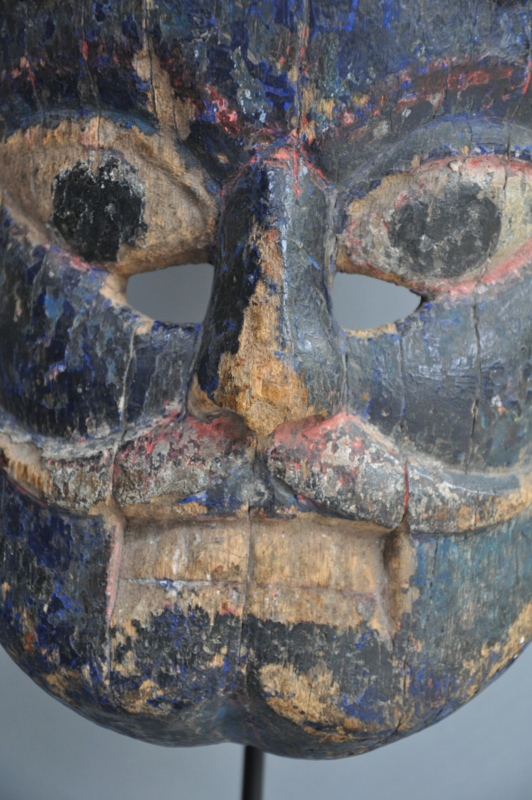




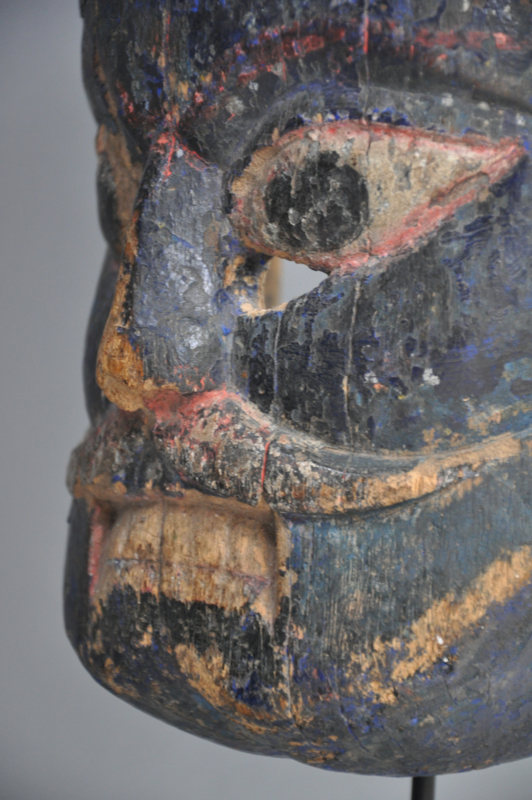
This rare wooden mask is an authentic ritual object originating from the Rajbanshi (Koch) community of the Terai region in southern Nepal. Visual analysis reveals a powerful synthesis between tribal expression and the "Sanskritized" identity of the Rajbanshi, where characters often represent royal or heroic figures (Raja).
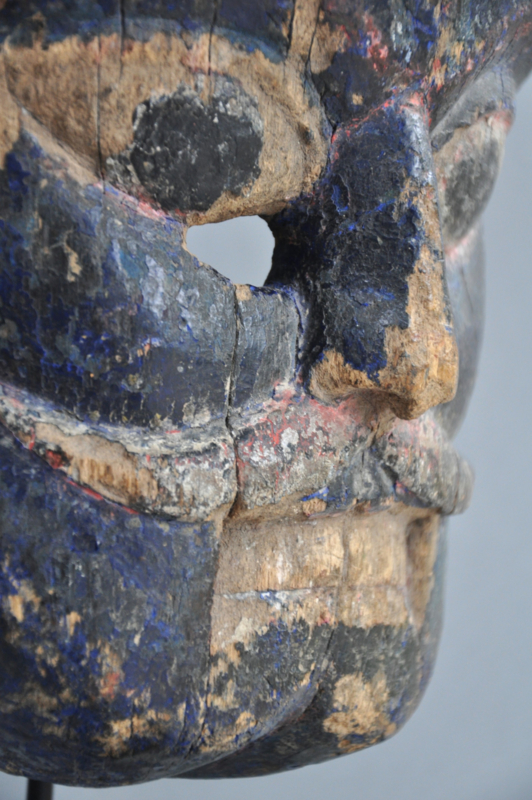
Iconography and Polychromy The mask is characterized by a deep, layered polychromy of blue-black pigments, which in Himalayan traditions symbolizes protective strength. The almond-shaped eyes are fully pierced and framed with ritual red pigment, representing life force and energy. The prominently carved mustache in relief and the stylized, ribbed turban indicate a character of high status, likely utilized in the Gomira dance or local Chor Khela theater performances.
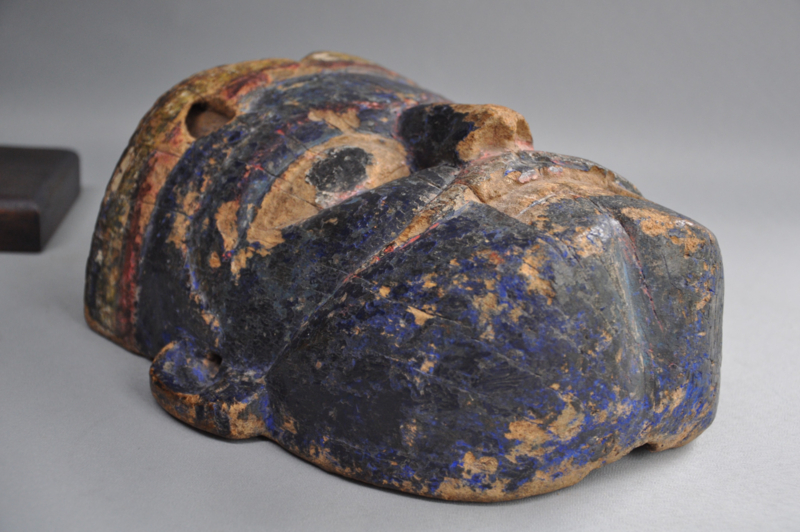
Material Analysis and Patina The reverse of the mask provides decisive evidence of age and authenticity. The deep hollowing shows manual adze and chisel marks, indicating its manufacture from a single block of dense hardwood. The dark oxidation on the interior results from years of direct contact with the dancer's skin and sweat.[18, 17] On the exterior, a "crusty" patina is visible, formed by the accumulation of soot, resins, and ritual offerings during the early 20th century.
Key Features
- Tribe/Region: Rajbanshi (Koch), Terai plains, Eastern Nepal, and Northern Bengal.
- Dating: Circa 1900-1920 (early 20th century).
- Material: Heavy hand-carved hardwood with layered polychromy.
- Dimensions/Weight: 28 cm in length and 1224 grams; a functional size for active ritual dance.
- Patina: Authentic ritual wear with soot and offering residues; deeply oxidized interior.
- Function: Ritual dance mask for the Gomira cycle (Mukha Nach) or heroic folk theater.
- Condition: Ritual-use condition with historical signs of age, including a characteristic opening on the forehead and stable traces of past insect activity.
- Valuation: €1,500 - €2,800,
This mask is not merely a piece of art but a "living face" (Mukha) embodying the spiritual and historical identity of the Rajbanshi people during a transformative era in the Himalayas.


 :
:  :
: