-74%
Old ghurra, churnstick holder - Nepal - 1rst half 20th century
Overview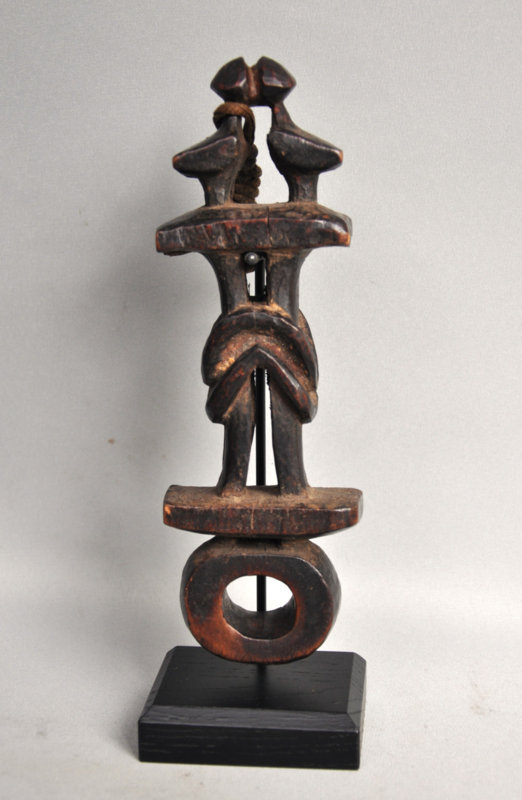

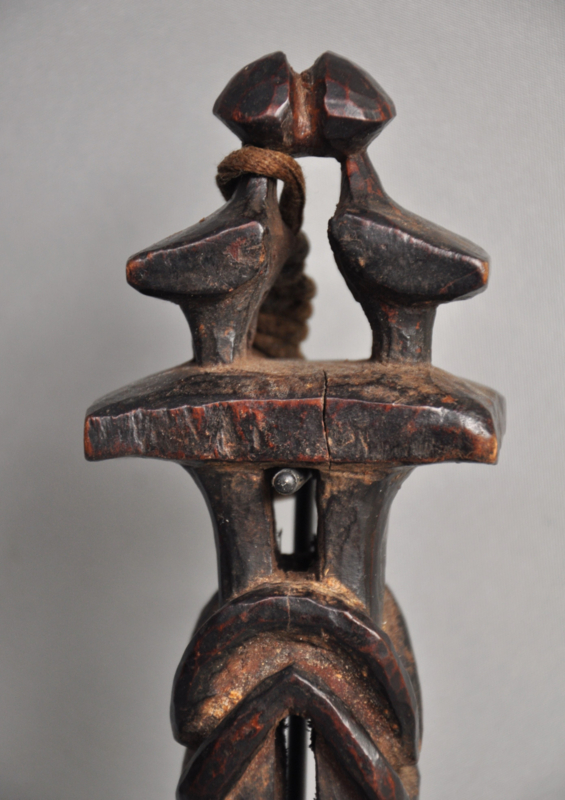
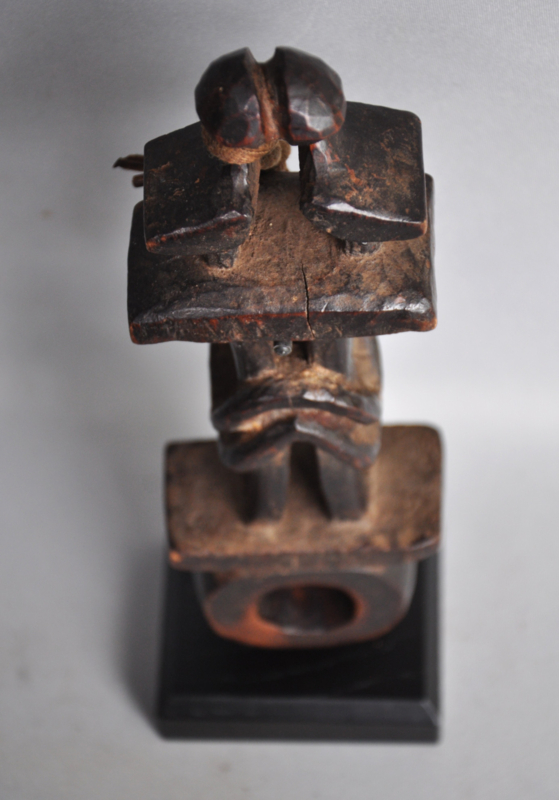
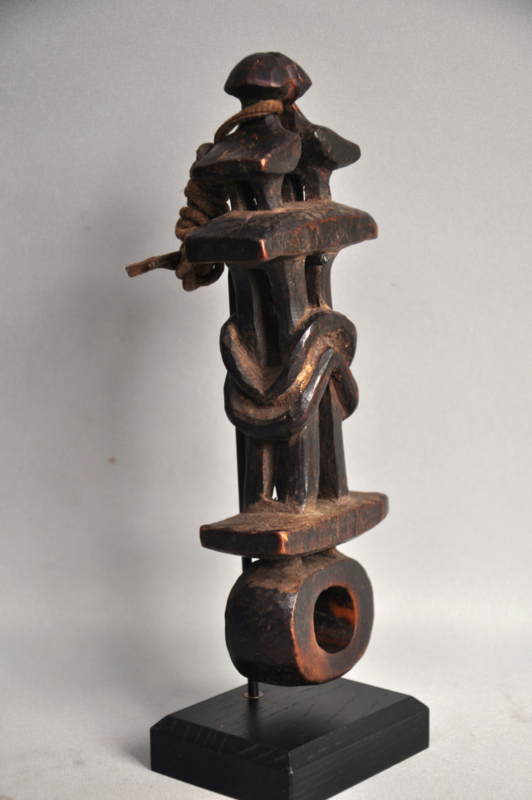
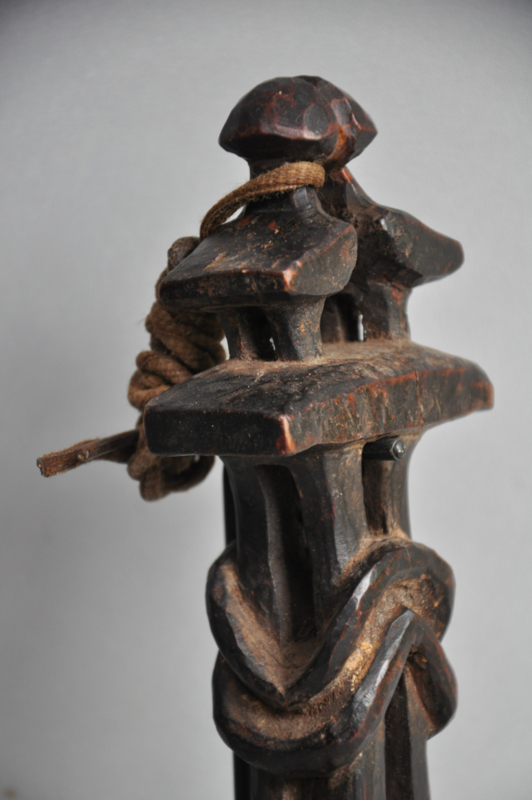
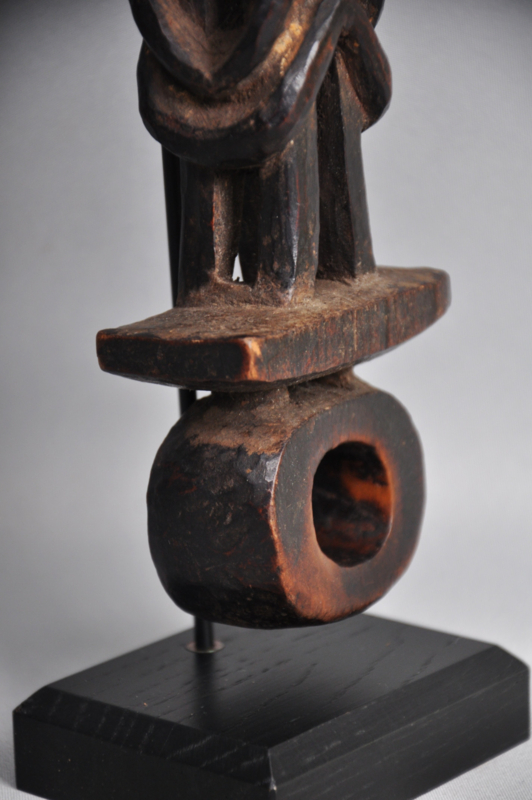

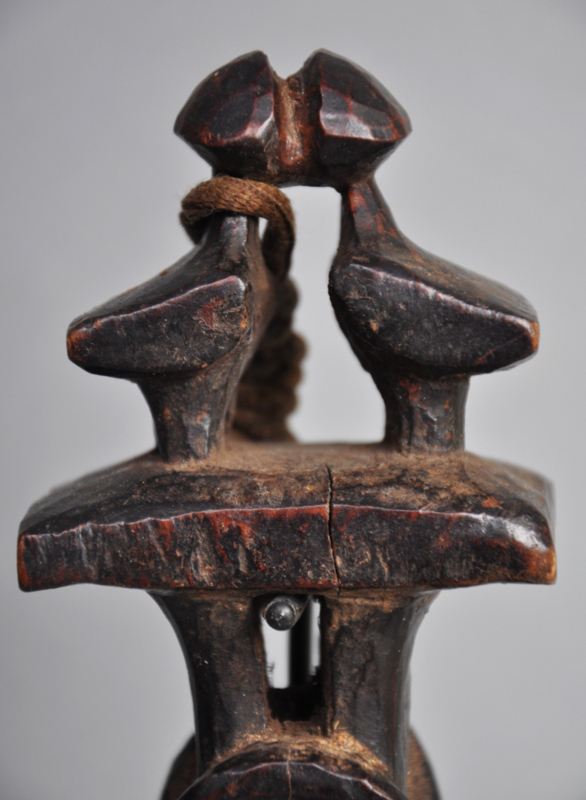
A Striking and Rare Ghurra: A Historical Churning Rod Holder
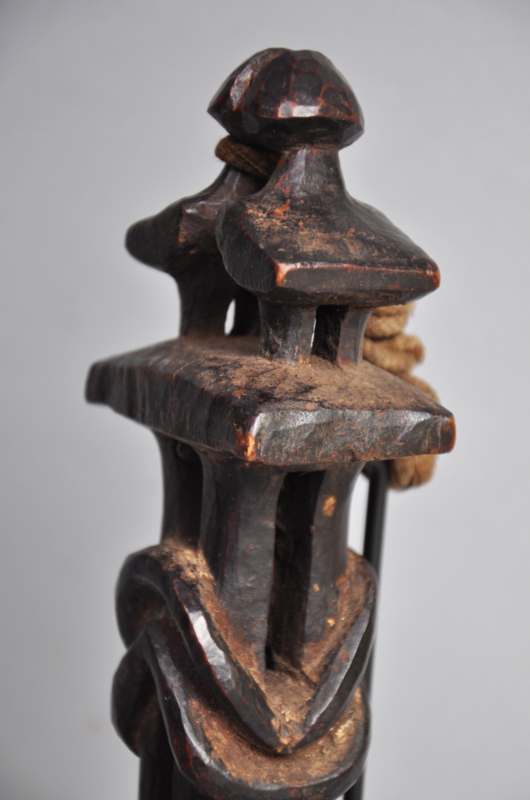
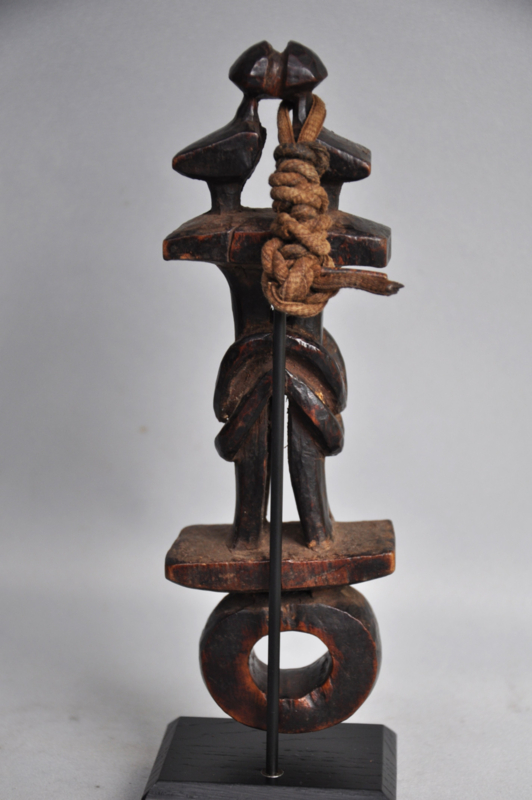
This exceptional and ancient ghurra (churning rod holder) features a beautifully crafted finial depicting two ducks, symbols of harmony and marriage. Given this iconography, it is highly likely that this piece served as a wedding gift. This thematic emphasis on duality and union is mirrored in the guneko motifs, which also incorporate two ducks, while the elegant, intertwining "scroll" below further signifies connection and interwoven fates.
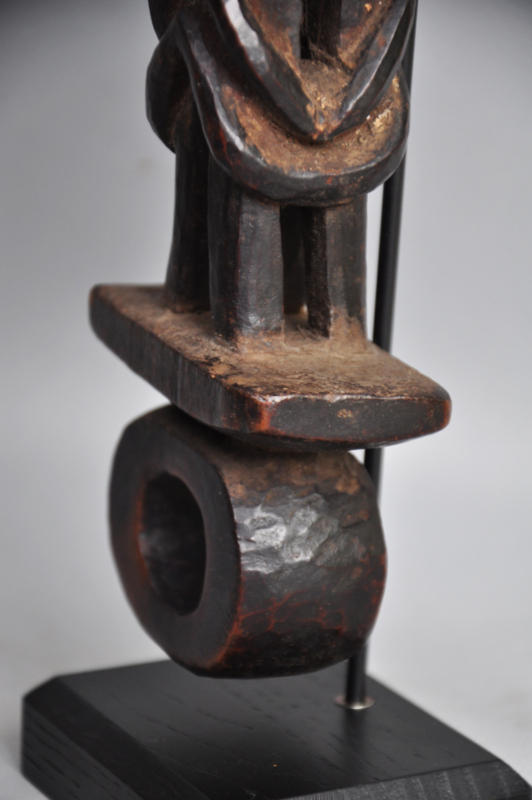
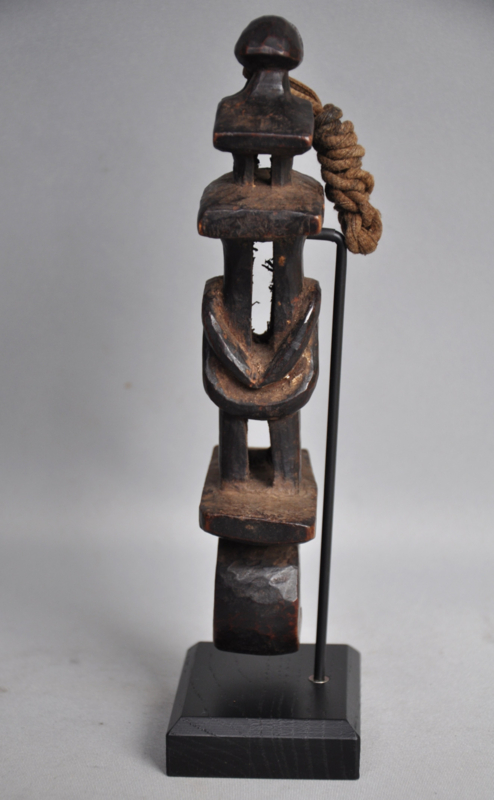
The object possesses a magnificent patina, commensurate with its age and long-term use. It retains its original cord and has been professionally mounted on a bespoke stand.
Length: 23 cm (approx. 26.5 cm including stand)
Weight: 257 grams
Origin: Nepal
Dating: 1st half of the 20th century
Provenance: Acquired from a private network in situ.
Cultural Significance
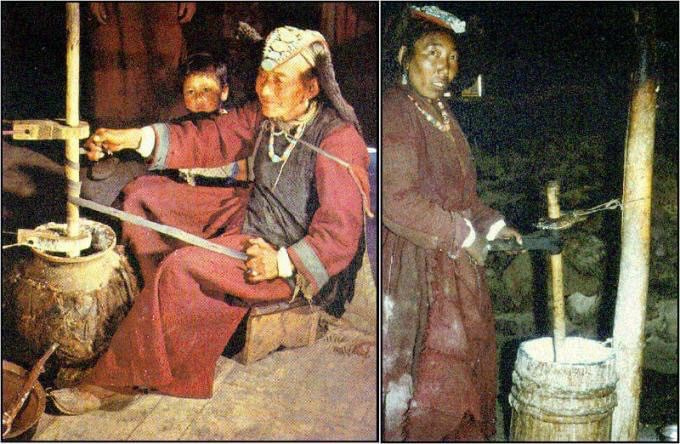
For centuries, the mountain peoples of Nepal have utilized the ghurra as an essential tool for churning milk into clarified butter (ghee). This domestic ritual is deeply rooted in the ancient Hindu myth of the Samudra Manthana—the Churning of the Ocean by gods and demons. This narrative not only recounts the creation of the world but also illustrates the eternal struggle between good and evil. Through the use of the ghurra, the act of churning is elevated to a sacred event, serving as a ritual confirmation of the Samudra Manthana. For the Nepali, the churning process represents darshan, a holy moment of the day when they are blessed by their deities. The decorations on these ghurras refer to the Hindu pantheon and act as conduits to the intangible mysteries of the universe—an expression of a transcendent reality hidden beneath the veil of the observable world.
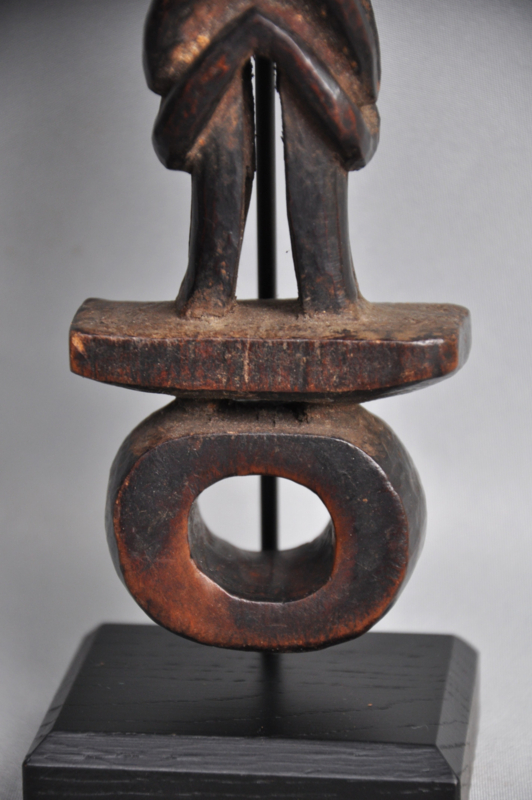
Ghurras feature a circular base representing the sun disc (chakra), the symbol of Vishnu, the protector god of Nepal and its people. This disc embodies the miraculous power of the universal soul, which creates, sustains, and destroys across all spheres of existence. Surmounting the sun disc is a vertical extension in the form of a lingam, the symbol of Shiva (the god of destruction and rebirth). This structure is composed of symmetrical figures and symbolic elements; no detail is a mere artistic invention, as every feature holds a specific ritual meaning.
Reference: Information concerning these ghurras is based on the 2004 exhibition catalogue, "Ghurra’s, goden uit de Himalaya - Nepalese volkskunst" (Ghurras, Gods of the Himalayas – Nepalese Folk Art), edited by Annemarie De Gendt and Paul De Smedt.


 :
:  :
: